



Direct Answer Box: Can AI-Guided Implant Surgery Fail?
Yes. AI-guided implant surgery can be very useful, but it does not guarantee that every jaw is suitable for a dental implant. The software helps plan the safest implant position using 3D scans, digital measurements and a surgical guide. But your jaw still needs enough bone height, bone width, gum health and safe space away from nerves, sinuses and nearby teeth.
If your scan shows thin bone, infection, poor implant angle or a nerve too close to the planned site, your dentist may change, delay or reject the guided implant plan. This does not always mean you cannot have a single tooth implant. It may mean you need a different treatment sequence.
Why AI Guidance May Not Work for Every Jaw
AI guidance is a planning tool, not a replacement for a dentist’s clinical judgement. The software can suggest an implant pathway, but your dentist must still check your bite, gum health, bone quality, smile line and final crown position.
Common reasons an AI-guided implant plan may not work include:
- Not enough jawbone width for the implant
- Not enough bone height near the lower jaw nerve
- A maxillary sinus that sits too close to the implant site
- Infection around the missing tooth socket
- Gum disease or bone loss around nearby teeth
- Poor bone density, especially in the upper back jaw
- Limited mouth opening, making guided access difficult
- A surgical guide that may not seat accurately
- A planned implant angle that would create a poor-looking crown
This is why a proper implant consultation should include a CBCT scan, bite assessment and discussion of your final tooth result, not just the implant screw.
Related reading: Do I need a bone graft before a dental implant?
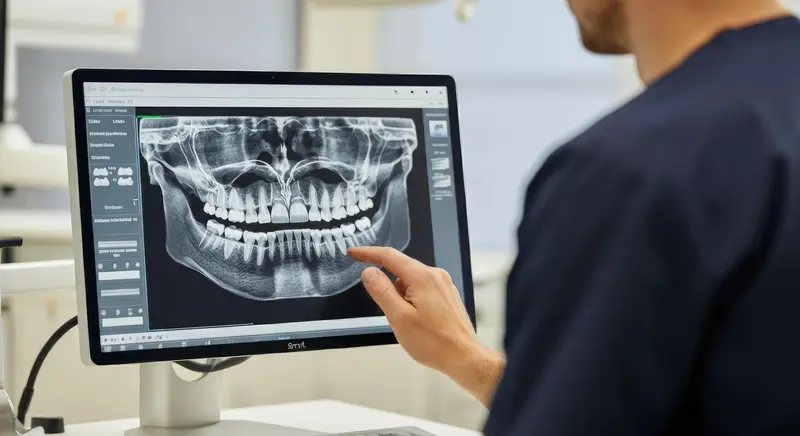
What Your Dentist Looks for on the 3D CBCT Scan
A CBCT scan gives your dentist a 3D view of your jaw. This is different from a normal dental X-ray because it shows the height, width and shape of the bone around the missing tooth.
Your Sydney dentist will check whether the dental implant can be placed safely without touching important structures. In the lower jaw, this usually means checking the distance from the inferior alveolar nerve. In the upper jaw, it often means checking the space below the maxillary sinus.
They also check the final crown position. A dental implant should not simply “fit into the bone.” It must sit in a position that allows the new tooth to look natural, feel comfortable and handle chewing pressure.
| Scan Finding | What It May Mean |
|---|---|
| Thin jaw bone | Bone graft may be needed. |
| Low sinus | Sinus lift may be needed. |
| Nerve too close | A shorter or angled implant may be considered. |
| Active infection | Implant treatment may need to be delayed. |
| Poor crown angle | The digital treatment plan may need to be redesigned. |
What Happens if the AI Plan is Rejected?
If your AI-guided implant plan is rejected, your dentist should explain why in clear language. The reason may be safety, appearance, long-term stability or healing risk.
A rejected plan does not always mean the treatment has failed. It often means the dentist has found a problem before surgery, which is exactly what digital planning is meant to do.
Your new treatment plan may include:
- Bone grafting before implant placement
- A sinus lift for an upper back tooth
- Gum disease treatment before surgery
- Tooth extraction with socket preservation
- A delayed implant after healing
- A shorter, narrower or differently angled implant
- A temporary tooth while the jaw heals
In some cases, your dentist may recommend a bridge or denture instead of an implant if the risk is too high.
This is where an itemised treatment plan matters. Ask for the implant placement, abutment, crown, grafting and scan fees to be separated clearly.
When Bone Grafting Becomes the Better First Step
Bone grafting may be recommended when the jaw has shrunk after tooth loss, infection, trauma or long-term denture use. The aim is to rebuild enough bone so the implant can sit in a stronger and safer position.
Some patients can have the graft and implant placed at the same visit. Others need staged treatment, where the graft heals first before the implant is placed later.
In many cases, the issue is not that implants are impossible. It is that the jaw needs preparation first.

Can You Still Get a Same-Day Implant?
Maybe, but not always. A same-day implant depends on primary stability. This means the implant must grip firmly into the bone on the day of surgery.
If the bone is too soft, too thin or infected, placing and loading the implant immediately may increase the risk of failure. In that situation, a delayed implant may be safer.
You may still be able to leave with a temporary tooth, temporary denture or temporary bridge while the implant site heals. This is especially important for front teeth, where appearance matters during treatment.
Questions to Ask Before AI-Guided Implant Surgery in Sydney
Before you agree to AI-guided implant surgery, ask your Sydney implant dentist these questions:
- Do I have enough bone for guided implant surgery?
- Is the implant close to a nerve or sinus?
- Will I need bone grafting before the implant?
- Can the implant support a natural-looking crown?
- What happens if the surgical guide does not fit on the day?
- Is the final crown included in my quote?
- Which item numbers apply to the implant and crown?
- Do you use CBCT planning for single tooth implants?
- What are my options if the implant is not safe right now?
Frequently Asked Questions
Can AI-guided implant surgery be wrong?
The digital plan can be limited if the scan, bite record, impression or surgical guide design is inaccurate. Your dentist must still check the plan clinically before and during surgery.
Does a rejected AI implant plan mean I cannot get an implant?
Not always. It may mean you need bone grafting, gum treatment, healing time or a different implant position before surgery.
Is freehand implant surgery better if guided surgery does not work?
Not necessarily. Freehand surgery may help in selected cases, but it still depends on your anatomy, bone volume and the dentist’s experience.
Why would my dentist stop implant surgery on the day?
Your dentist may stop if the guide does not fit, the bone quality is poor, infection is found or the implant cannot be placed safely.
What should I do if I was told my jaw is not suitable for an implant?
Ask for a second-opinion CBCT review, itemised quote and written explanation of your options.
Author Bio
Dr Paulo Pinho is a dental implant dentist at Tooth Implant Sydney, where he helps patients assess their suitability for dental implants, implant bridges, and full-arch implant solutions. His treatment planning considers each patient’s 3D scan results, jawbone condition, bite, gum health, and long-term goals.
Disclaimer: Any surgical or invasive procedure carries risks. This article is general information only and does not replace a personal consultation.