


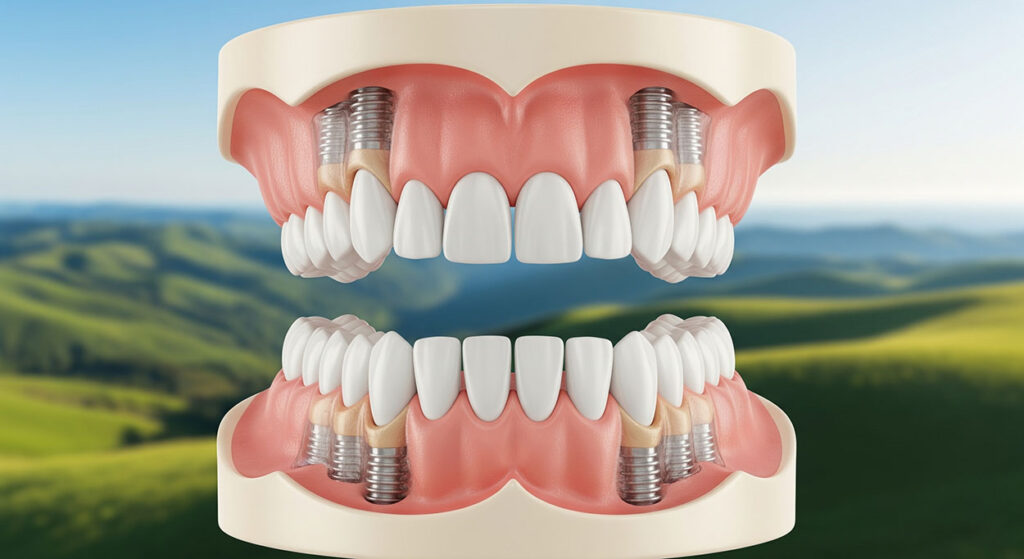
Missing most or all teeth affects eating, speech, and confidence, and dentures do not suit everyone. In Sydney, many patients compare All-on-4 dental implants with an All-on-6 approach when they want a fixed full-arch replacement. Both options use implants to support a full set of teeth, but the right choice depends on bone, bite forces, health history, and how the final bridge will be designed and maintained.
All-on-4 vs All-on-6: what the treatment actually means
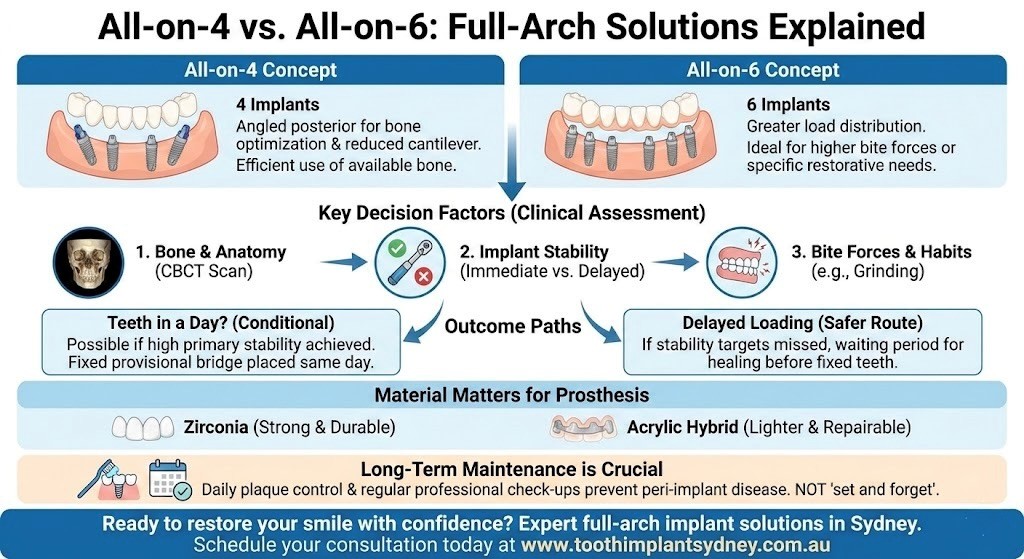
“All-on-4” is a widely described full-arch concept using four implants to support a fixed provisional bridge and, later, a definitive prosthesis. The typical arrangement places two implants towards the front and two at the back, with posterior implants often angled to work with available bone and reduce the length of the cantilever.
“All-on-6” is not usually a single branded system. It generally describes the same style of full-arch bridge supported by six implants instead of four. Adding implants can offer greater distribution of load and may suit certain jaw shapes, higher bite forces, or restorative designs that call for extra support.
How clinicians decide between four and six implants
A sensible way to think about this decision is to start with the teeth you want to end up with and plan backwards.
- Bone and anatomy come first: Planning commonly relies on three-dimensional imaging so the clinician can assess bone height, width, and the position of anatomical structures. A CBCT scan provides that map and helps determine whether implants can be placed in positions that properly support the bridge.
- Implant stability affects the loading plan: “Same-day” fixed teeth depend on achieving strong primary stability.
- Bite forces and habits change the engineering: People who clench or grind can put higher stress on the back of a full-arch bridge. In those cases, clinicians may lean toward more support points, adjust the bite scheme, or recommend materials that better suit the forces involved. It’s rarely one factor in isolation.
- Extra procedures may be part of the picture: In some jaws, the angled implant approach reduces the need for grafting by making better use of existing bone. In other cases, bone grafting is recommended to create the foundation needed for safer placement and a stronger restorative plan.
Is “Teeth in a day” Really Possible?
Many people looking for full-arch implants in Sydney are really asking one practical question: “Will I walk out with teeth?” The answer depends on whether immediate loading criteria are met on the day.
A common pathway looks like this:
- Consultation, medical history review, and 3D imaging
- Digital planning and discussion of bridge materials and costs
- Surgery (often including extractions if needed)
- A fixed provisional bridge when implant stability allows
- A healing period before the final bridge is made and fitted
Immediate function protocols often specify stability targets at placement, and if those targets are not reached, a delayed loading approach is safer.
Materials matter more than most people expect
Patients often focus on implant numbers, yet day-to-day comfort and long-term maintenance are strongly influenced by the prosthesis itself.
- A zirconia full-arch bridge is commonly chosen for strength and wear resistance. A well-designed zirconia option can suit patients who want a highly durable final bridge and have space for the material and framework design.
- An acrylic hybrid bridge can be lighter, easier to adjust, and in some cases simpler to repair if chips occur. It may also be used as a provisional stage in certain workflows. The right choice depends on bite forces, available restorative space, aesthetics, and how easily the patient can maintain hygiene around the bridge.
If you are comparing full mouth dental implants, ask not only what the final bridge is made from, but also how it will be serviced over time and what repairs typically look like in that clinic.
Recovery, aftercare, and keeping implants healthy
- Most recovery is manageable with appropriate pain control and soft food diet, though swelling and bruising are common early on. The more meaningful long-term issue is not the initial recovery week but the years after.
- Peri-implant mucositis and peri-implantitis are biological complications that can occur around implants, and plaque control and ongoing monitoring are key parts of prevention.
- Regular assessment, risk-factor control, and professional plaque removal are important when it comes to long-term maintenance.
- This is where patient expectations need a reset. Fixed full-arch bridges are not “set and forget.” They are closer to a high-performance dental device: reliable when cared for, vulnerable when neglected.
How to Choose full-arch Dental Implants in Sydney
If you are researching full arch dental implants in Sydney, look for specifics rather than slogans. Useful questions include:
- Who plans and designs the final bridge, and how is the bite checked?
- What criteria do you use to decide on immediate versus delayed loading?
- What follow-up schedule is included, and who provides maintenance?
- How do you handle complications such as screw loosening or chipping?
Clear, calm answers are usually a good sign that the clinic is organised around predictable outcomes rather than quick sales.
Frequently Asked Questions:
1. Are these the same as implant supported dentures?
Not always. Some implant-retained dentures are designed to be removable by the patient, while many full-arch “All-on-X” treatments involve a fixed bridge that only the clinician removes for servicing.
2. What is a fixed implant bridge, and how is it cleaned?
It is a prosthesis secured to implants with screws or a similar retention method. Cleaning usually involves careful brushing, low-abrasive products, and tools such as interdental brushes or water irrigation, paired with professional maintenance visits.
3. Is one option always better?
No. Four implants can be a very predictable solution when anatomy and bite conditions suit the plan, and six implants can be a sensible choice when additional support improves load distribution or restorative design. Decisions should be based on examination findings and a detailed plan, not a simple implant count.